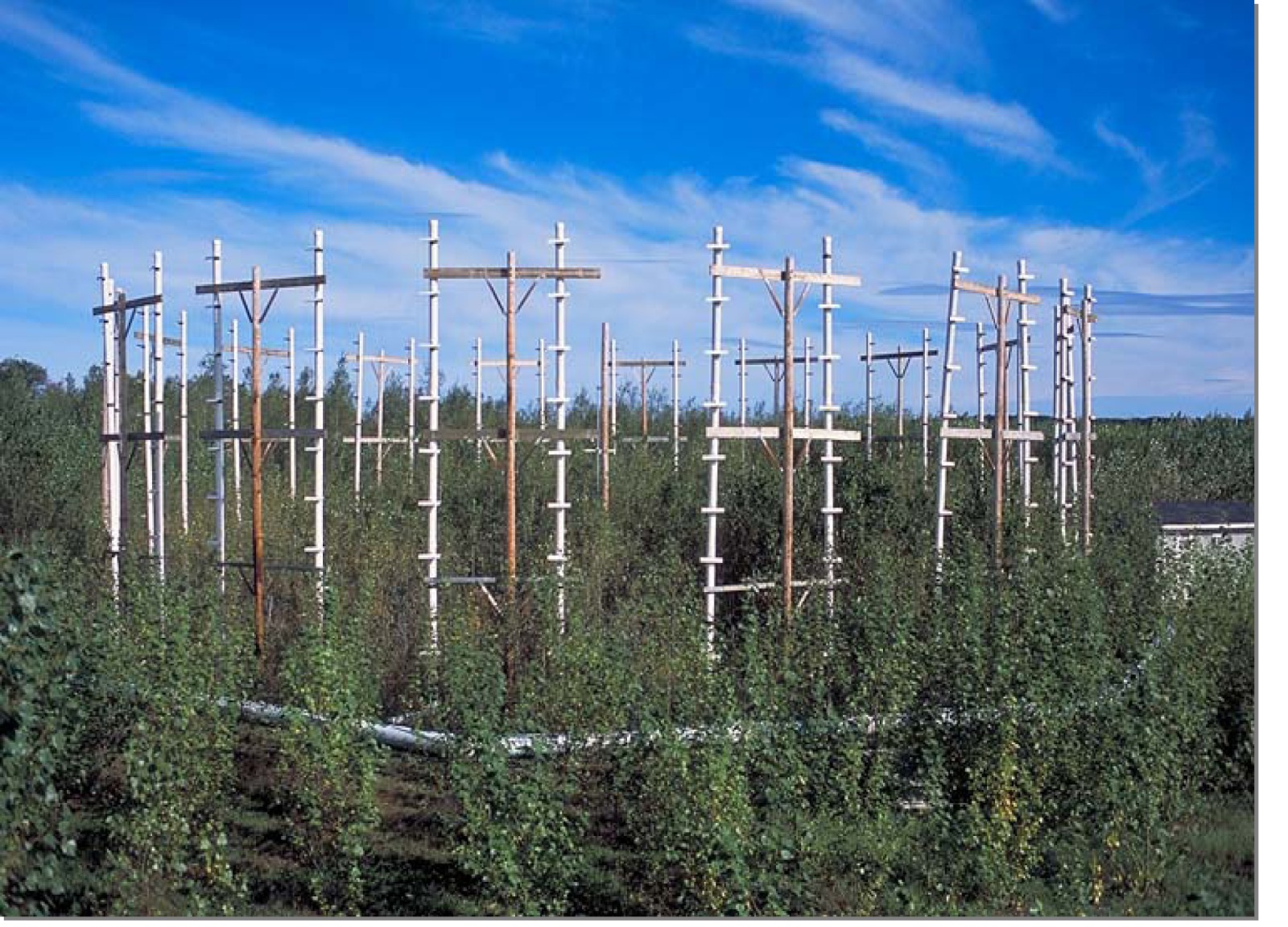
Free-Air Ozone Enrichment (FAOE)
Supports studies on the effects of elevated ozone concentrations on plant growth, physiological responses, and crop productivity under open-air conditions.
Saveer’s Climate Change Study Facilities support research into how rising atmospheric carbon dioxide (CO₂), increasing temperatures, elevated ozone levels, and other environmental factors influence plant growth and ecosystem processes. These facilities enable researchers to conduct experiments under open-air and controlled conditions, generating data to understand plant responses and support the development of models for future climate scenarios.
Supports studies on the effects of elevated ozone concentrations on plant growth, physiological responses, and crop productivity under open-air conditions.
Enables researchers to investigate plant and crop responses to elevated CO₂ concentrations under field conditions while maintaining much of the surrounding natural environment.
Supports investigations into how increased temperatures affect crop growth, development, and responses to heat stress.
Facilitates studies on the combined effects of carbon dioxide concentrations and temperature on plants under controlled conditions.
Enables experiments under defined environmental conditions to investigate plant responses to selected climate-related variables.
Supports the evaluation of crop adaptability, physiological responses, and tolerance to climate-related stresses.
Supports continuous observation of selected ecological and plant-growth processes.
Enables systematic data collection, storage, and backup, depending on the facility’s monitoring and data-management systems.
Helps researchers examine how increased carbon dioxide concentrations influence plant growth and development.
Generates experimental data that can contribute to models predicting plant and ecosystem responses under future climate scenarios.
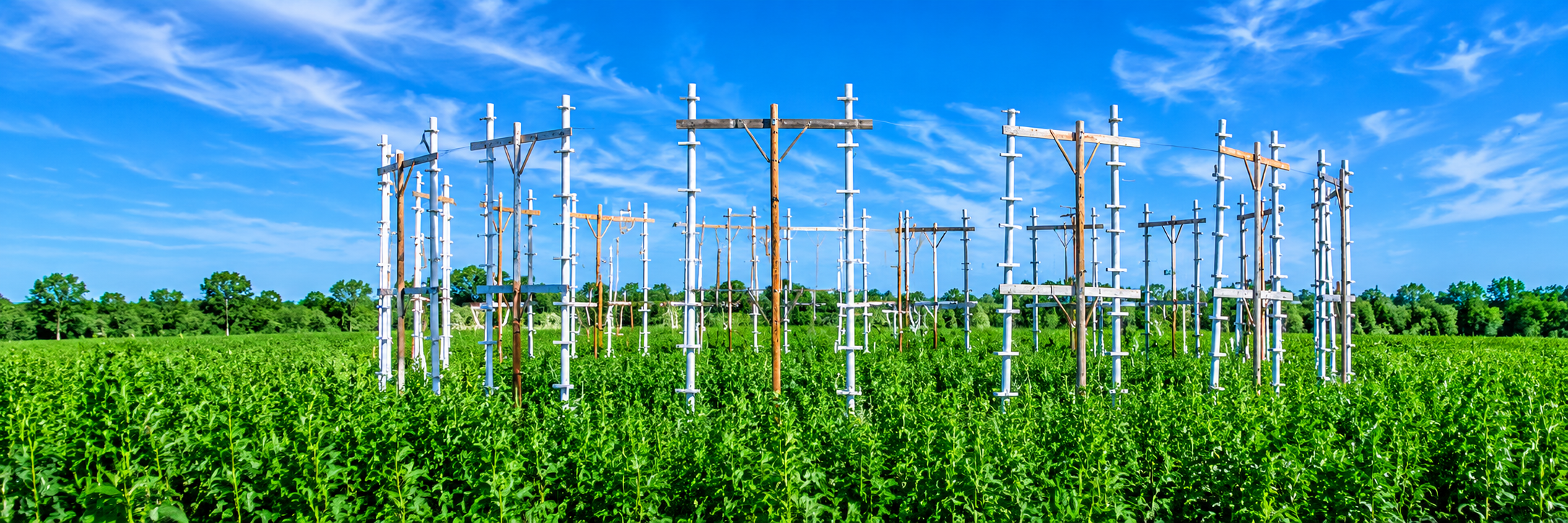
Understanding how plants and ecosystems respond to climate change is essential for evaluating future agricultural productivity and environmental sustainability. Changes in atmospheric CO₂ concentrations, temperature, and ozone levels can influence plant physiology, crop development, and ecosystem processes.
Saveer has established research infrastructure incorporating Free-Air Carbon Dioxide Enrichment (FACE), Free-Air Temperature Enrichment (FATE), and CO₂–Temperature Gradient Chambers (CTGC) at research institutions to support studies of changing climatic conditions and their effects on agricultural systems. These approaches allow researchers to investigate climate-related variables in open-field settings or controlled environments, depending on the experimental objective.
Open-air enrichment systems help researchers study plant responses under conditions that retain important aspects of the natural environment. Controlled chambers, meanwhile, enable selected environmental variables to be manipulated under defined experimental conditions. Together, these approaches support the collection of research data for evaluating plant responses to changing climate conditions.
The resulting datasets can contribute to the development and validation of models used to assess potential future climate impacts on crops and ecosystems. Saveer’s technical team supports facility planning around research objectives, experimental requirements, and site-specific conditions.
Enquire Now ›